Finding Your Voice
When Fatherhood Feels Heavy
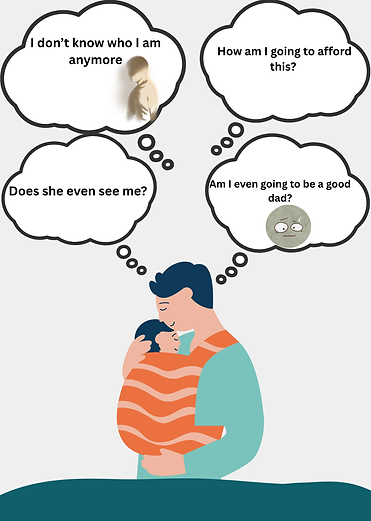
You’re not alone. Many fathers describe feeling unseen, overwhelmed, and unsure of how to talk about what they’re experiencing (Richardson et al., 2025).
Research shows that fathers often struggle silently, balancing love for their child with pressure to stay strong, provide, and not burden others (Copland & Hunter, 2025). This silence can make it harder to recognize when support is needed. fathers are significantly less likely to seek help, even when experiencing distress, often due to stigma and limited father-focused services (Mancinelli & Filippi, 2025).
Recognizing what you’re feeling is not weakness. It’s awareness.
And awareness is the first step toward change.
Common Emotional & Behavioral Symptoms
-
Feeling disconnected from your partner or baby
-
Irritability, anger, or frustration
-
Trouble focusing or making decisions
-
Loss of interest or motivation
-
Changes in sleep or appetite
-
Guilt for not feeling happy
Signs That You Need More Support
-
Persistent sadness, anger, or numbness lasting more than two weeks
-
Withdrawal from family or friends
-
Thoughts of hopelessness or being a burden
-
Turning to alcohol or substances to cope
-
Panic attacks or intense anxiety
-
Escalating relationship conflict
These are not signs of weakness. They are signals that your body and mind need care.
Go-To Strategies for Dads
The CARE Model
C — Connect
Talk to someone you trust.
Honest connection is the first step to healing.
A — Acknowledge
Name your feelings:
“I’m tired,” “I’m overwhelmed,” “I’m scared.”
Naming gives power back to you.
R — Restore
Do one thing that fills you up.
Take a walk, listen to music, or rest.
Small moments of joy matter.
E — Regulate
Pause and breathe.
Try the STOP technique:
Stop | Take a breath | Observe | Proceed mindfully.
You Are Not Alone.
Many fathers experience emotional challenges after the birth of a child, even if they do not openly discuss them. Research indicates that approximately 1 in 10 fathers experience depression during the first year postpartum, with additional studies identifying elevated levels of anxiety and psychological distress during this transition (Schöch et al., 2024; Watkins et al., 2024). Fathers often navigate significant changes in identity, role expectations, and responsibility, which can contribute to increased stress and emotional strain. This period is also associated with challenges in communication and relationship dynamics, with studies noting increased conflict, emotional distance, and shifts in partner connection (Copland & Hunter, 2025; Mancinelli & Filippi, 2025).
These experiences are more common than many people realize and they are not permanent. With the right kind of support, fathers can improve their mood, rebuild connection in their relationships, and feel more like themselves again.
Seeking help is not a sign of weakness. It is a research-supported and proactive way of taking care of yourself, your partner, and your family.
Visit the CARE Model page or connect with a clinician who understands the emotional landscape of fatherhood.
Your voice matters. Your healing begins with being seen.